
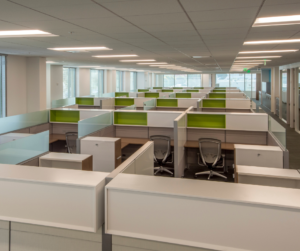
 How to Choose the Right Office Cubicles for Your Houston Business
Choosing the right office cubicles is one of the most consequential decisions a Houston business can make when furnishing or redesigning a workspace. The wrong choice wastes floor space, frustrates employees, and creates a layout that cannot scale. The right choice supports focus, collaboration, and long-term flexibility — all without blowing your capital budget.
This guide breaks down the key factors that should drive your cubicle selection process, from panel height and footprint to system compatibility and acoustic performance.
Why Cubicle Selection Matters More Than You Think
Cubicles are not simply dividers between desks. They define how your team communicates, how noise travels through the office, how visitors perceive your brand, and how efficiently your square footage gets used. A poorly designed cubicle layout can reduce productivity, increase employee turnover, and create real estate waste that adds up to thousands of dollars per year.
Houston businesses operating in industries like energy, healthcare, and professional services face unique layout challenges — high headcounts, shifting team structures, and frequent reconfiguration needs. The right cubicle system needs to grow with you.
Step 1: Define How Your Team Actually Works
Before evaluating any product, audit your workflow. Ask yourself:
- How much time do employees spend on focused, heads-down work versus collaboration?
- Do teams need visual privacy, acoustic privacy, or both?
- How often does your headcount or team structure change?
- What technology do employees use at their desks (multiple monitors, docking stations, video conferencing equipment)?
The answers directly influence whether you need high-panel systems, low-panel benching, or something in between. If you are unsure, our consultation and planning service can help evaluate your specific workflow before you commit to a system.
Step 2: Understand Panel Height Options
Panel height is the single biggest variable in cubicle design, and it affects everything from privacy to natural light distribution.
- 42–48 inch panels — Seated privacy with standing visibility. Good for open, collaborative cultures that still need minimal distraction.
- 53–65 inch panels — Standing privacy. The most common height range for traditional office environments, balancing privacy with accessibility.
- Full-height panels (66″+) — Maximum acoustic and visual privacy. Best for roles involving sensitive calls, confidential documents, or deep concentration work.
If your team includes both call center roles and analytical roles, consider a mixed-panel strategy that addresses both needs within the same floor plan.
Step 3: Evaluate Footprint and Density
The most popular cubicle footprints are 6×6, 6×8, and 8×8. Smaller footprints increase density and reduce per-seat cost but can feel cramped for employees who spend most of the day at their desks. Larger footprints improve comfort and storage but require more square footage per person.
For Houston businesses with limited floor plates or growing headcounts, sit-stand cubicles and team stations offer density benefits without sacrificing ergonomic quality.
Step 4: Consider System Flexibility
The best cubicle systems are modular — meaning panels, worksurfaces, and storage components can be rearranged without replacing the entire system. This is especially important for Houston companies in growth mode. If you hire 10 more employees next year, can your current system expand? If a team restructures, can you reconfigure without buying new?
Look for systems that support custom configurations and are compatible with divider panels, overhead storage, and power accessories.
Step 5: Plan for Power and Technology
Modern cubicle systems need to support today’s technology requirements. This means integrated power accessories like in-panel outlets, USB charging ports, and cable management. Running exposed cords across workstations creates safety hazards and looks unprofessional. Ask your furniture dealer how each system handles power integration before purchasing.
Step 6: Think About Acoustics
Open offices and low-panel layouts have become popular, but noise remains the number one complaint in modern workplaces. Higher fabric panels absorb sound. Glazed panels (glass inserts) add light but sacrifice acoustic performance. Screens and space dividers can supplement acoustic performance without requiring a full system replacement.
Work With a Local Expert
The cubicle selection process involves dozens of variables that are difficult to evaluate from a catalog. Working with a local Houston office furniture specialist means someone can walk your floor, understand your workflows, and recommend solutions that fit your space, culture, and budget — not just a generic configuration.
At Facility Solutions Plus, we offer free office consultations that include space planning, product recommendations, and budget guidance. Our team has helped hundreds of Houston-area businesses find cubicle systems that perform for years — not just look good on a showroom floor.
Ready to get started? Request your free consultation today and let our team help you build a workspace that works.