
Office Ergonomics and Acoustics for Workspaces
Quick Answer: Strong workspace acoustics combine three moves: block sound with panels, walls, and screens; absorb it with soft surfaces and ceiling treatments; and cover what remains with sound masking. Layer those with ergonomic furniture placement, and a noisy open floor in a shared office building becomes a space where people can focus and speak privately.
When you sign a lease in a multi-tenant office building, you inherit more than square footage. You inherit a ceiling plenum shared with the suite next door, an HVAC system that hums on a schedule you do not control, and hard surfaces that bounce every phone call across the floor. Most teams furnishing a new suite focus on desks and chairs, then discover three weeks after move-in that nobody can concentrate and no conversation feels private.
Noise is the complaint employees raise most often in open and semi-open offices, and it is the one that quietly erodes focus, privacy, and retention. The good news for business owners and office managers in Katy and Houston is that acoustics and ergonomics are design decisions, not afterthoughts. When handled correctly during the furnishing stage, they cost a fraction of what a post-occupancy fix would.
How Acoustic and Ergonomic Workspace Design Actually Works
Professionals describe sound control with a simple framework: Absorb, Block, Cover. Each layer solves a different problem, and skipping one is where most offices go wrong.
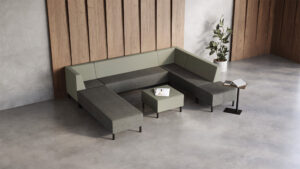
- Absorb. Hard drywall, glass, and polished concrete reflect sound and let it travel. Soft, porous materials soak it up. Acoustic ceiling tiles, wall-mounted panels, carpet tiles, and lounge and soft seating reduce the echo that makes a room feel chaotic.
- Block. Some sound needs a physical barrier. Acoustic divider panels between workstations, freestanding privacy screens, and full-height demountable walls stop sound from crossing zones. For private calls and focused work, enclosed focus pods isolate the source entirely.
- Cover. You cannot absorb or block every sound. Sound masking adds a low, engineered background tone through ceiling speakers that raises the ambient noise floor just enough to make nearby speech unintelligible. Conversations stop carrying. Counterintuitively, adding the right sound makes a room feel quieter.
Ergonomics is the fourth layer, and it interacts with all three. Where you place a workstation determines who hears whom. Facing rows of desks toward an absorptive wall instead of an open aisle, separating heads-down roles from collaborative ones, and routing foot traffic away from quiet zones are layout decisions that cost nothing extra yet shape the acoustic experience as much as any panel. Good space planning and floor layout is where acoustics and ergonomics meet.
Why This Matters When You Lease Space in the Greater Houston Area
A standalone building gives you control over the shell. A suite inside a shared office building does not, and that changes the math.
- Sound travels through the plenum. Many office buildings use a shared ceiling void above demising walls that stop short of the deck. Speech and music pass over the wall into the suite next door. Tenants are often surprised that their neighbor can hear a conference call clearly.
- You cannot rebuild the structure. Lease terms usually prohibit altering base-building walls or ceilings. That pushes the solution toward furniture-based and freestanding acoustic treatments you can install, move, and take with you.
- Confidentiality is a legal exposure, not just a comfort issue. Medical, legal, financial, and HR conversations carry compliance obligations. If a patient’s name or a salary figure is audible from the lobby, that is a real risk, not an inconvenience.
- Open plans amplify everything. The same layout that encourages collaboration also broadcasts every keyboard, call, and side conversation. Without intervention, employees cope by wearing headphones all day, which defeats the point of an in-person office.
The stakes are concentration, privacy, and the simple ability to hold a meeting without closing a door you may not have. For executive suites and shared workspaces where multiple businesses operate under one roof, acoustic separation between tenants becomes a selling point you can market.
The Payoffs and the Pitfalls of Multi-Tenant Office Buildings
Done well, acoustic and ergonomic design pays back quickly. Done carelessly, it wastes budget and frustrates the people it was meant to help.
What goes right
- Measurable gains in focus time and fewer interruptions during deep work.
- Private conversations stay private, supporting compliance and trust.
- Lower employee fatigue, since constant background noise is a real source of stress.
- A quieter, more professional impression for clients who visit.
- Flexible, freestanding solutions that move with you at lease-end and protect your investment.
What goes wrong
- Treating only one layer. Hanging panels but skipping masking leaves speech intelligible across the floor. Adding masking without any absorption produces a loud, fatiguing hum. The layers work together or not at all.
- Buying acoustic-rated cubicles and arranging them wrong. A high panel facing the wrong direction funnels sound rather than stopping it. Placement is half the result.
- Over-correcting. A space deadened with too much absorption feels lifeless and makes people speak louder to compensate. Balance matters.
- Ignoring the ergonomic layer. Panels cannot fix a layout that seats a sales team beside an accounting team that needs silence. Zoning has to come first.
When should you invest heavily in acoustics? Any time you have open seating, client confidentiality requirements, or a high concentration of phone and video work. When can you scale it back? A small private-office suite with hard-walled rooms and few open desks may need only modest absorption and thoughtful seating. The decision should follow how your team actually works, not a one-size template.
Comparison: Acoustic Treatment Options Side by Side
Four approaches solve different problems. Most effective offices combine two or three rather than relying on one.
- Acoustic panels and screens. Best for absorbing echo and creating light visual and sound separation between desks. Fast to install and movable. They reduce reflected noise but do not stop determined sound on their own. Use them in open bullpens and between facing workstations. Skip them as your only measure if you need true speech privacy.
- Sound masking. Best for speech privacy across an open floor where blocking is impractical. It is the most effective single tool for making conversations unintelligible at a distance. It does nothing for echo or for impact noise, so it works as a layer, not a standalone fix. Ideal for call-heavy and confidential environments.
- Barriers, pods, and demountable walls. Best when you need actual enclosure: private calls, focus rooms, or separating tenants. Pods drop in without construction; demountable walls create rated rooms you can reconfigure later. Higher cost, highest privacy. Use when confidentiality is non-negotiable. Avoid over-building if your team thrives on openness.
- Layout and soft furnishings. Best as the foundation under everything else. Zoning loud and quiet functions, adding carpet, upholstered seating, and plants, and orienting desks intelligently shape acoustics before a single panel is hung. Lowest cost, broad impact, but rarely sufficient alone for true privacy.
The right mix depends on your floor plan, headcount, and the nature of your work. That is exactly the analysis a planning conversation is built to resolve.
Why Katy Businesses Need the Facility Solutions Plus Team
Acoustics is where furniture selection, layout, and building reality intersect. That is the work Facility Solutions Plus does every day for Houston-area offices.
Hands-on experience across real build-outs
Our team has furnished and reconfigured workspaces of every size, from single executive suites to full corporate floors. We have seen how sound behaves in shared buildings and which combinations of panels, screens, pods, and layout actually hold up after move-in. That pattern recognition saves you from expensive trial and error.
Reliability from plan to install
We manage the project end to end: consultation and space planning, furniture selection, delivery, and professional installation, all under one accountable team. No fragmented vendors blaming each other when a panel arrives wrong. We coordinate around your building’s loading dock rules, freight elevators, and after-hours access so your team is not disrupted.
Quality products and current acoustic technology
We specify acoustic-rated panel systems, privacy screens, enclosed pods, and demountable wall systems from established manufacturers, matched to the performance your space requires. You get solutions sized to the problem, not a catalog upsell.
Local coverage built around Katy and Houston
We are based in Katy and focused on the Greater Houston market, which means we understand local building requirements, timelines, and the realities of multi-tenant properties here. You can see materials and configurations in person at our Katy office furniture showroom before you commit.
Frequently Asked Questions
Will acoustic panels alone make my open office quiet?
Not by themselves. Panels absorb echo and provide light separation, but they do not stop speech from carrying across a floor. For real conversational privacy you pair absorption with sound masking and, where needed, enclosed pods or barriers. The layers work together.
Can I install acoustic treatments in a leased suite without violating my lease?
In most cases yes, because freestanding panels, screens, pods, and demountable walls do not alter base-building structure. Always confirm with your landlord, but furniture-based acoustic solutions are specifically valued because they install without construction and move with you at lease-end.
What is sound masking, and is it the same as white noise?
Sound masking is an engineered, evenly distributed background sound tuned to the frequency range of human speech, delivered through ceiling speakers. It is more refined than basic white noise. By gently raising the ambient noise floor, it makes nearby conversations unintelligible without being noticeable itself.
How early should acoustics be considered when furnishing a new office?
At the layout stage, before furniture is ordered. Zoning quiet and collaborative areas, orienting desks, and selecting panel-equipped workstations are far cheaper to plan up front than to retrofit after move-in. Acoustics designed in from the start costs a fraction of a later fix.
Do I need acoustic treatment if we have mostly private offices?
Less of it, but rarely none. Hard-walled rooms still transmit sound through shared plenums and doors, and hard surfaces inside each office create echo. Modest wall absorption, soft seating, and door seals are often enough for a private-office layout.
Plan a Quieter, More Productive Workspace
If you are furnishing or reconfiguring a suite in a Houston or Katy office building, acoustics and ergonomics deserve a seat at the table alongside desks and chairs. The Facility Solutions Plus team will assess your floor plan, your team’s work patterns, and your building’s constraints, then recommend the right blend of absorption, blocking, masking, and layout. Reach out for a consultation, or visit the Katy showroom to experience the difference good acoustic design makes before you commit.