
Houston Office Furniture: Repair & Refurbishment
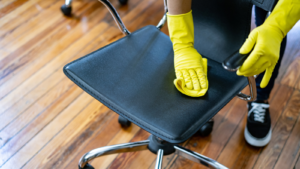 When a cubicle panel tears, a chair stops adjusting, or a once-sharp office starts looking worn, the instinct is to replace everything. For most Houston businesses, that instinct is expensive and unnecessary. A large share of office furniture that gets thrown out still has years of service left in it. Repair and refurbishment recover that value, at a fraction of replacement cost and with a fraction of the downtime.
This is what professional repair and refurbishment actually involves, when it makes sense, and how to decide between fixing what you have and buying new.
Quick Answer
Office furniture repair and refurbishment restores worn, damaged, or dated pieces to like-new function and appearance for far less than replacement. Facility Solutions Plus repairs, cleans, and refurbishes office furniture across the Houston area, helping businesses cut costs, reduce waste, and avoid the downtime of a full re-furnish.
Why Repair and Refurbish Instead of Replace
Replacement is the most visible option, so it gets chosen by default. But the default is rarely the smartest choice. Quality office furniture is built to last well beyond its cosmetic life. A chair mechanism can be rebuilt. A worn fabric can be replaced. A scratched work surface can be refinished. The structure underneath is often perfectly sound.
The case for repair and refurbishment comes down to three pressures every facility manager feels:
- Cost. Refurbishing typically runs a fraction of buying new, freeing budget for the projects that actually need it.
- Downtime. Targeted repairs keep your office running, instead of shutting down a floor for a full replacement and install.
- Sustainability. Extending furniture life keeps usable assets out of the landfill, supporting real environmental goals rather than slogans. Pieces beyond saving can still move into furniture recycling and reuse.
There is a quieter benefit as well. Furniture your team already knows carries settings, adjustments, and habits built up over time. Restoring those familiar pieces avoids the disruption of retraining everyone on new chairs and workstations, and it preserves ergonomic configurations that took months to dial in. Replacement quietly erases all of that, then asks your team to start over.
For organizations watching capital budgets, a cleaning, repair, and refurbishment program is one of the highest-return decisions in facilities management.
How the Repair and Refurbishment Process Works
Good refurbishment is methodical. The goal is to restore both function and appearance while spending only where it returns value.
- Assessment. Each piece is evaluated for structural integrity, mechanism wear, surface condition, and upholstery. This separates what is worth restoring from what is past its useful life.
- Cleaning. Deep cleaning of surfaces, fabrics, and frames often recovers a surprising amount of the original look on its own.
- Repair. Failed components are fixed or replaced: chair mechanisms, drawer glides, panel connectors, casters, and hardware.
- Refurbishment. Reupholstery, refinishing, and panel recovering bring pieces back to a current, professional standard that matches your space.
- Reinstallation. Restored furniture is returned and set in place, with worn-out items routed to recycling or decommissioning as needed.
Pairing this with a regular office furniture maintenance routine extends the cycle even further, so small issues get caught before they become replacement decisions.
When to Repair, When to Refurbish, When to Replace
Not every piece deserves saving, and a straight answer protects your budget better than a blanket recommendation.
Repair when the structure is sound and only a component has failed, like a chair cylinder or a drawer slide. Refurbish when the bones are good but the look is dated or worn, where reupholstery and refinishing restore the whole piece. Replace when the frame is compromised, parts are obsolete, or the cost to restore approaches the cost of new. What happens if you replace prematurely: you spend several times what a repair would have cost and create avoidable waste.
The judgment call is exactly where a professional assessment earns its keep. An honest evaluation tells you which pieces to restore, which to retire, and how to phase the work so your office never grinds to a halt.
The Benefits, and the Risks of Skipping Professional Help
Done right, repair and refurbishment delivers obvious returns: lower cost than replacement, minimal disruption, a consistent and professional look across mismatched pieces, and a smaller environmental footprint. It also extends the life of furniture you already trust, preserving ergonomic settings your team is used to.
Skip the professional route and the risks pile up. A patch-job repair fails again within weeks. Wrong adhesives or finishes ruin a surface permanently. Improperly rebuilt chair mechanisms become a safety liability. And without a real assessment, businesses routinely throw out furniture that had years left, or pour money into pieces that should have been retired. The combination of wasted spend and avoidable downtime is the worst of both outcomes.
Why Not All Furniture Repair Services Are Equal
Repair sounds like a commodity until the results come back. The differences between providers are significant.
- The handyman fix: cheap and fast, but rarely matched to commercial-grade furniture, and often a temporary patch rather than a real repair.
- The single-trade upholsterer: capable on fabric, but unable to address mechanisms, structure, refinishing, and reinstallation as one project.
- The full-service workspace partner: assesses, cleans, repairs, refurbishes, reinstalls, and recycles, treating your furniture as an asset portfolio rather than a one-off task.
Facility Solutions Plus operates in that last category, and ties refurbishment into broader services like space optimization, so a refresh can also become a chance to improve the layout you already have.
Which Furniture Is Worth Refurbishing
Some pieces respond to refurbishment far better than others, and knowing the difference focuses your spend where it returns the most.
- Task and executive chairs: mechanisms, casters, and upholstery are all serviceable, and a rebuilt quality chair often outperforms a cheap new one.
- Cubicle panels and systems: recovering fabric panels and replacing connectors refreshes an entire floor for a fraction of new systems furniture.
- Casegoods and desks: solid cases with worn tops are strong candidates for refinishing rather than replacement.
- Conference and meeting tables: surface refinishing and edge repair restore the high-visibility pieces clients actually see.
Items with cracked frames, obsolete proprietary parts, or water and structural damage are usually better retired. The assessment exists precisely to draw that line for you.
Turn a Refresh Into an Upgrade
A refurbishment cycle is also the ideal moment to improve, not just restore. While pieces are being assessed and moved, reconfiguring the layout, updating finishes to a current palette, or consolidating mismatched furniture into a consistent standard adds little to the project cost yet meaningfully upgrades the space. Many businesses find that a planned refresh delivers most of the impact of a full re-furnish at a small share of the price.
Building a Furniture Lifecycle Program
The businesses that spend the least on furniture over time are rarely the ones that buy the cheapest. They are the ones that manage furniture as a lifecycle rather than a series of emergencies. A lifecycle program treats your furniture as tracked assets, with scheduled cleaning, planned refurbishment, and repairs handled before small problems force expensive replacements.
The payoff is predictable budgeting and a workspace that stays consistently professional instead of slowly degrading until a costly overhaul becomes unavoidable. Tying maintenance, repair, refurbishment, recycling, and even new furniture to a single partner means one team understands your full inventory and can advise on the most cost-effective move at every stage. That continuity is the quiet difference between facilities that control their furniture costs and facilities that are controlled by them.
FAQ
How much can refurbishment save versus buying new?
Savings vary by piece and condition, but refurbishment commonly costs a fraction of replacement. A professional assessment gives you a clear comparison so you can decide piece by piece.
Will refurbished furniture look noticeably used?
Properly refurbished furniture, with reupholstery, refinishing, and deep cleaning, typically returns to a current, professional standard. In many cases it is difficult to tell restored pieces from new ones.
Can you work around our business hours to limit downtime?
Yes. Repair and refurbishment can be phased and scheduled to keep your office operating, with work coordinated to minimize disruption to your team.
What happens to furniture that cannot be saved?
Pieces beyond reasonable repair are routed to responsible recycling and reuse or handled through decommissioning, so nothing usable is wasted and disposal stays accountable.
Why Houston Facilities Trust Facility Solutions Plus
Hands-on experience. Years of repairing, cleaning, and refurbishing commercial furniture across corporate, healthcare, education, and industrial spaces means accurate assessments and repairs that hold.
Dependable service. A 5.0 Google rating reflects responsive scheduling, fair pricing, and crews that show up and finish the job, including repeated cubicle repairs and installations for returning clients.
Quality and full capability. From mechanism rebuilds to reupholstery and refinishing, the work is matched to commercial-grade standards rather than quick patches, protecting both safety and appearance.
Houston-area coverage. A central Katy base with greater Houston reach keeps assessment, repair, reinstallation, and recycling local and accountable under one team.
Before you replace furniture that may still have years left, get it assessed. Request a free office consultation or call 281-433-8240 to find out what is worth restoring and what is not.